
Guides
Importing goods from Turkey into Switzerland
For many Swiss businesses, Türkiye is an obvious sourcing market: a broad industrial base, short routes to Europe and a free trade agreement with EFTA. A smooth import takes more than a good price, though – it needs vetted suppliers, clean paperwork and well-planned logistics.
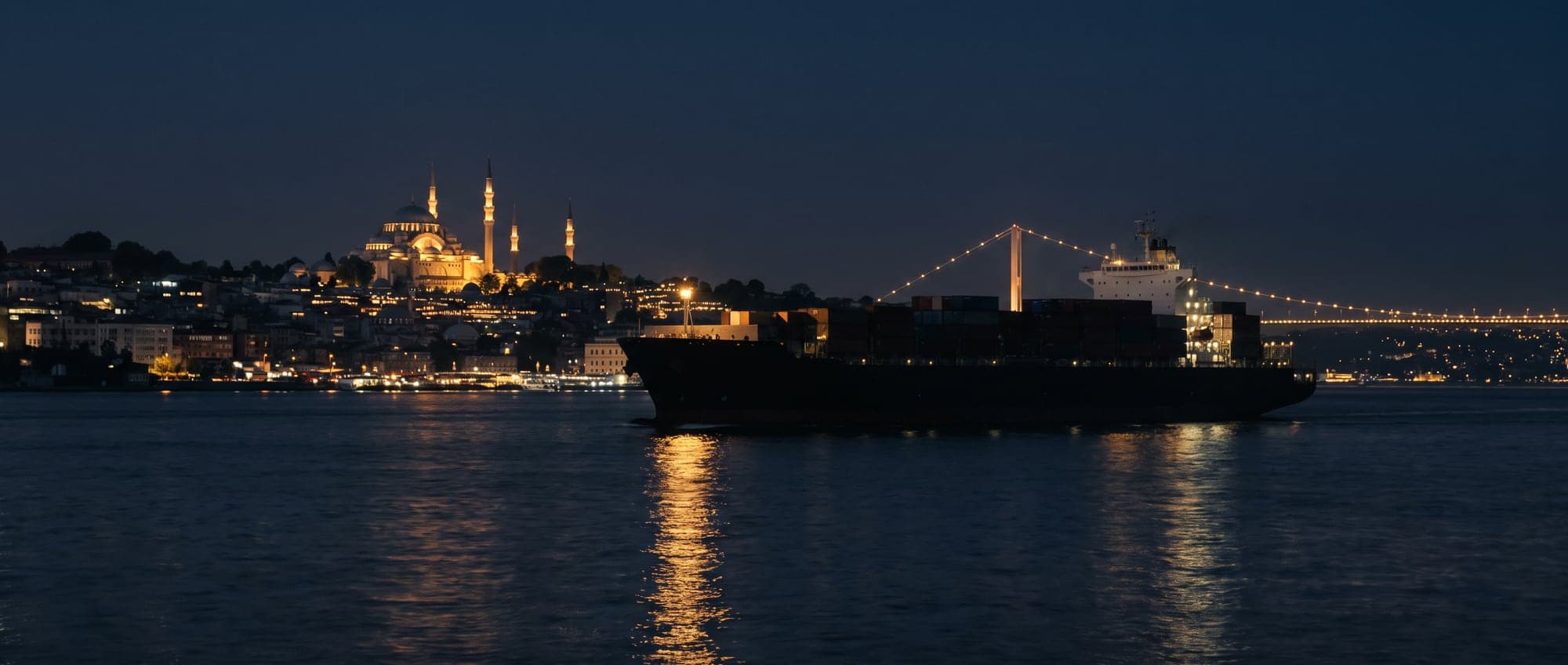
Why source from Türkiye?
Türkiye has a broad manufacturing industry and sits between Europe and Asia. For Swiss buyers this means shorter transit times than from the Far East, flexible order sizes and often the chance to visit production sites in person.
Typical product categories Swiss companies source from Türkiye include, for example:
- Textiles and apparel, home textiles (towels, bed linen, curtains)
- Food such as dried fruit and nuts
- Ceramics, tiles and sanitary ware
- Furniture and interiors
- Metal and machinery parts, automotive components
The EFTA–Türkiye free trade agreement
Through EFTA, Switzerland has a free trade agreement with Türkiye. The modernised agreement was signed on 25 June 2018 and entered into force on 1 October 2021. It covers industrial goods, fish and processed agricultural products, as well as services, intellectual property and public procurement. Agricultural products fall under a separate, likewise modernised bilateral Switzerland–Türkiye agricultural agreement that entered into force the same day.
The key practical point: since 1 January 2024 Switzerland has unilaterally abolished tariffs on industrial goods. For textiles, machine parts or furniture there is usually no customs duty on import anyway – so the agreement adds no extra tariff advantage here. Preferential origin still matters mainly for agricultural and processed agricultural products, which remain dutiable in Switzerland, and for Swiss exports to Türkiye.
| Goods | Duty on import into Switzerland | Proof of origin relevant? |
|---|---|---|
| Industrial goods (ch. 25–97, few exceptions) | generally duty-free since 1 Jan 2024 | rarely for customs, sometimes required by customers |
| Agricultural and processed agricultural products | dutiable, preference possible | yes – required for the preferential rate |
| All goods | import VAT 8.1 % or 2.6 % | regardless of origin |
As of September 2026 – details may change; the information published by the FOCBS (BAZG) and SECO and the Tares customs tariff are authoritative.
Getting the proof of origin right
To claim a preferential rate you must prove preferential origin. The agreement’s rules of origin follow the Regional Convention on Pan-Euro-Mediterranean preferential rules of origin (PEM), which under certain conditions allows cumulation of materials from Türkiye, the EFTA states and other PEM countries.
Depending on the agreement and the consignment value, the proof is either an EUR.1 movement certificate or an origin declaration on the commercial invoice. Agree in the contract which proof the supplier will provide and check it before shipment – a missing or incorrect proof is hard to fix afterwards.
The process step by step
From the first enquiry to cleared goods in Switzerland.
- 01Classify the goods
Determine the eight-digit tariff number in the Swiss customs tariff Tares. It drives duty, VAT rate and any permit requirements.
- 02Vet the supplier
Check the commercial register extract, references, certificates and production capacity; for larger orders, visit or audit the factory.
- 03Approve samples
Order and test samples, then keep an approved reference sample against which series production is measured.
- 04Agree contract and Incoterm
Put specification, price, payment terms, delivery date, proof of origin and the Incoterm with place in writing.
- 05Inspect before shipment
A pre-shipment inspection by an independent inspection body on site confirms quantity, quality and packaging before the balance is paid.
- 06Arrange transport and transit
Appoint a forwarder; goods usually cross the EU under a transit procedure to the Swiss border or an inland customs office.
- 07Clear customs in Switzerland
The forwarder or customs broker declares the goods; any duty and import VAT are charged, often via the ZAZ customs account.
Transport: truck, container or air freight
The right mode depends on volume, urgency and the goods. Türkiye is a party to the Convention on a common transit procedure (NCTS), so goods can cross the EU under customs control and be cleared only in Switzerland.
| Mode | Typical route | Suited to |
|---|---|---|
| Truck overland | via the Balkans and Central Europe | part and full loads, predictable lead times |
| Truck combined with ro-ro ferry | ferry to Italy (e.g. Trieste), then by truck | full loads, often faster than overland |
| Sea freight in containers | via Mediterranean or North Sea ports, then rail or truck | large volumes, less time-critical goods |
| Air freight | direct to Swiss airports | samples, spare parts, urgent shipments |
Payment terms and risks
With a new supplier, payment terms are a key lever for limiting risk. Common options:
- Advance payment: simple, but the buyer carries all the risk – only for small amounts or proven partners.
- Deposit plus balance after inspection or against shipping documents: a frequent compromise.
- Documentary letter of credit: the bank pays only against compliant documents – high security, but fees and formalities.
- Documentary collection: documents released against payment or acceptance – cheaper, but less secure.
- Open account: common in established, trusted relationships.
Mind the currency risk: prices in euros or US dollars and moving exchange rates can shift your calculation noticeably. Fix the contract currency and price validity clearly.
How ZETA supports you
ZETA supports sourcing projects from Türkiye, from finding suppliers to delivery in Switzerland. We help select and vet suppliers, coordinate samples and quality checks, and align the process with suppliers, forwarders, customs brokers and inspection bodies.
The customs declaration itself is filed by a forwarder or customs broker; detailed legal and tax questions are clarified with the FOCBS, the Federal Tax Administration or your accountant. We make sure everyone has the right information at the right time.
Frequently asked questions
Do I pay customs duty on goods from Türkiye?
For industrial goods, usually not: Switzerland abolished industrial tariffs on 1 January 2024. Agricultural products may still be dutiable; with a valid proof of origin a preferential rate is sometimes available. The Tares tariff is authoritative.
Is VAT due when importing from Türkiye?
Yes. The FOCBS levies import VAT on almost all goods, currently 8.1 % or 2.6 % (reduced rate, e.g. for food). VAT-registered businesses can usually reclaim it as input tax.
Which proof of origin applies in trade with Türkiye?
Depending on the agreement and value, an EUR.1 movement certificate or an origin declaration on the invoice. It matters above all for agricultural products and for exports to Türkiye.
How long does transport from Türkiye take?
It depends on the mode, route and clearance. Trucking is generally much faster than sea freight; your forwarder will quote exact lead times.
Does ZETA have an office in Türkiye?
No. ZETA works from Zurich and coordinates projects with suppliers, forwarders and independent inspection bodies on site.
More guides
Importing into Switzerland: customs, VAT and process
Customs duty since 2024, import VAT, tariff numbers and declarations: what businesses need to know when importing into Switzerland.
Finding and vetting suppliers abroad
From specification to first order: sourcing channels, due diligence checklist, samples, contracts and the key Incoterms.
Exporting from Switzerland: documents and process
Export declaration, export proof, origin and export controls: how goods leave Switzerland for foreign markets.